

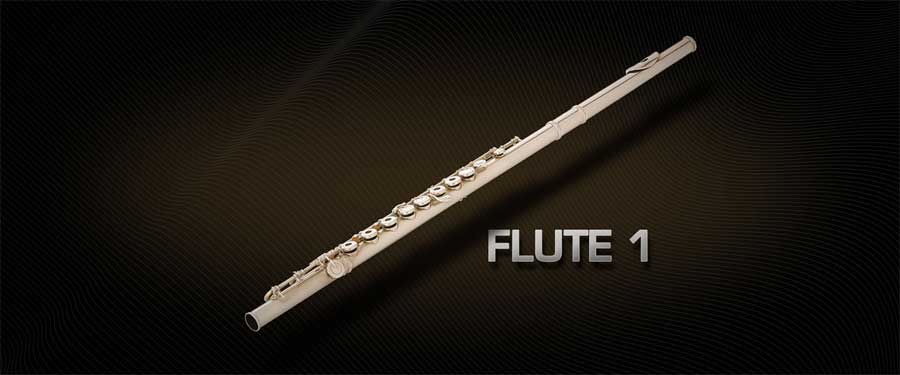
Die Flute 1 der Vienna Symphonic Library ist eines der meistgenutzten und vielseitigsten Instrumente im gesamten VSL-Katalog. Sie stellt die klassische Große Flöte (Querflöte) dar und ist für ihre außergewöhnliche Reinheit, technische Präzision und ihren lyrischen Glanz bekannt.
Wie bei vielen VSL-Instrumenten gibt es zwei Hauptversionen: die ursprüngliche VI Series (aufgenommen in der trockenen Silent Stage) und die moderne Synchron Flute 1.
1. Klangcharakter: Brillant und Luftig
Die Flute 1 zeichnet sich durch einen sehr fokussierten und klaren Ton aus:
- Tiefes Register: In der Tiefe klingt sie warm und hat eine leicht rauchige Textur, die sich hervorragend für intime, melancholische Soli eignet.
- Mittellage: Hier ist sie extrem flexibel und dient oft als die "singende" Stimme des Holzbläsersatzes.
- Hohe Lage: In den oberen Registern wird sie strahlend und brillant, ohne dabei schrill oder unangenehm zu wirken. Sie besitzt eine enorme Durchsetzungskraft über einem vollen Orchester.
2. Artikulationen: Die Messlatte für Realismus
Die Flute 1 gehört zu den am detailliertesten gesampelten Instrumenten der VSL. Besonders hervorzuheben sind:
- Performance Legato: VSL wurde durch diese Technologie berühmt. Die Übergänge zwischen den Noten bei der Flute 1 sind so fließend, dass man kaum einen Unterschied zu einer echten Aufnahme hört.
- Fast Repetitions & Runs: Flöten sind für ihre enorme Beweglichkeit bekannt. Die Library enthält spezialisierte Samples für schnelle Skalen und Arpeggien, die den typischen "Flow" einer echten Flöte einfangen.
- Vibrato-Kontrolle: Es gibt Samples mit progressivem Vibrato, ohne Vibrato und mit starkem Espressivo-Vibrato, was eine sehr feine emotionale Steuerung ermöglicht.
- Triller: Enthalten sind sowohl Halbton- als auch Ganzton-Triller, die oft in verschiedenen Geschwindigkeiten verfügbar sind.
3. Die Synchron-Version (Synchron Stage Vienna)
Die Synchron Flute 1 wurde in der großen Stage A aufgenommen:
- Natürlicher Hall: Sie besitzt bereits den edlen Raumklang der Synchron Stage, was sie sofort "fertig" klingen lässt.
- Multi-Mikrofonierung: In der Full Library hast du Zugriff auf verschiedene Mikrofonpositionen (Close, Mid, Decca Tree, Surround), um die Flöte entweder sehr intim oder weit hinten im Orchester zu platzieren.
- Agility-Modus: Die Synchron-Engine erlaubt ein sehr intuitives Spiel von schnellen Passagen, bei denen die Software automatisch erkennt, wie schnell du spielst, und die passenden Samples wählt.
4. Die VI-Version (Silent Stage)
Die klassische VI Flute 1 ist staubtrocken aufgenommen:
- Maximale Flexibilität: Mit Tools wie MIR Pro oder MIRx kannst du diese Flöte in jeden Raum der Welt setzen – ob in die Teldex Scoring Stage oder das Wiener Konzerthaus.
- Präzision: Da kein Raumhall die Details verschleiert, ist diese Version ideal für sehr komplexe, technische Passagen oder Pop-Produktionen, in denen man volle Kontrolle über das Reverb-Design haben möchte.
5. Technische Übersicht
| Merkmal | Details |
| Tonumfang | Reicht vom tiefen C (c1) bis zum hohen D (d4) |
| Klangfarbe | Klar, silbrig, lyrisch, agil |
| Besonderheit | Extrem reaktive Legato-Spielweise |
| Empfehlung | Das Standard-Instrument für fast jedes orchestrale Arrangement |
Fazit: Die VSL Flute 1 ist ein Arbeitspferd für jeden Komponisten. Sie beherrscht den Spagat zwischen technischer Virtuosität und hochemotionalem, gesanglichem Spiel perfekt.
Nie war eine Orchester-Library so gut [...], nie gab es so viele, qualitativ höchstwertige Samples in Verbindung mit einem intelligent gemachten Sampleplayer. Gerade letzterer stellt nicht nur für alle Computer-Orchestratoren einen großen Sprung nach vorne dar, sondern er festigt auch die Positionierung von VSL als Speerspitze technischer Innovation gepaart mit orchestraler Authentizität gegenüber der Konkurrenz.
Martin Gerke, Sound & Recording, März 2007
While Woodwinds I is fine for basic woodwind arrangements, certain instruments on Woodwinds II are indispensable for serious orchestral work. The combined cost of the two collections is hefty, but quality usually comes at a price; if you need a comprehensive woodwind section capable of every musical nuance under the sun, the pair offer an immaculate solution.
5 Stars, Sound on Sound, November 2006
It’s fair to say that Vienna Instruments are pushing the boundaries of how sampled instruments sound and play. Offering unprecedented control over articulations and expression, VSL’s Vienna Instruments afford professional composers and mockup masters with one of the most comprehensive and sophisticated instruments on the market. The recording quality is uniformly excellent, the performances are consistently superb, and the range of articulations is exhaustively comprehensive.
John Krogh, Keyboard, August 2006
Sometimes it’s hard to believe that you’re actually playing what you hear – the transitions are that smooth. Nothing else can do that. [The player’s] interface is very clear, and it takes no time to learn your way around it. I was able to load 1.745 GB of samples into the 2GB installed on the Windows machine, which is absolutely phenomenal – over half a gig more than anything else has ever loaded on that computer. Still subjectively, VSL’s greatest strength – apart from the subtlety of expression you’re able to achieve with such a vast selection of articulations – is somewhat intangible: the notes all have a meaning. This especially true for the short woodwinds; rather than just going “toot”, their possibilities are immediately obvious. All the major software samplers have improved by leaps and bounds in many important areas, but they haven’t necessarily focused their efforts on making the wonderful new libraries they spawned easy to manage. The Vienna Instruments player sets new standards in that category, and also in its memory access performance. That, combined with the incredible breadth of the library itself, allows you to do some things nothing else can do.
Nick Batzdorf, Virtual Instruments Magazine June/July 2006
The Vienna Instruments combine full instrumentation with the greatest musical depth of any orchestral sound library. The Vienna Instruments Player has the power to make orchestral samples sound more realistic than ever before, and its highly flexible switching system reduces the strain of setting up arrangements.
Dave Stewart, Sound on Sound, July 2006
Firma: Vienna Symphonic Library