

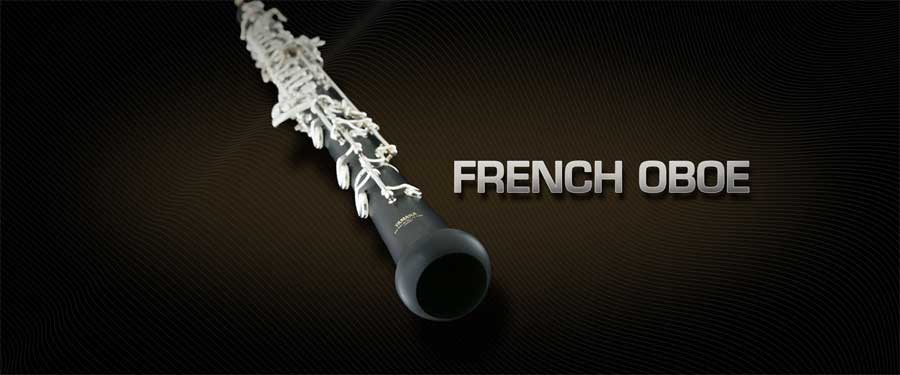
Die French Oboe der Vienna Symphonic Library ist die Verkörperung des klassischen, lyrischen Oboenklangs, wie man ihn aus den großen Konzerthäusern der Welt kennt. Im Vergleich zur (ebenfalls von VSL angebotenen) Viennese Oboe ist die französische Variante das internationale Standardinstrument, das für seine enorme Wendigkeit und seinen süßen, singenden Ton geschätzt wird.
VSL hat dieses Instrument mit akribischer Detailtreue in der Silent Stage eingefangen, um jede Nuance des Rohrblatt-Widerstands und der Luftführung abzubilden.
1. Der Klangcharakter: Nasal, Farbig, Flexibel
Die French Oboe zeichnet sich durch ein sehr spezifisches Timbre aus:
- Brillanz: Der Klang ist etwas obertonreicher und "heller" als bei der Wiener Oboe. Er besitzt eine silbrige Qualität, die sich im Orchestergraben wunderbar abhebt.
- Lyrik: In der Mittellage ist sie das ultimative Instrument für melancholische, sehnsuchtsvolle Themen.
- Stabilität: Trotz ihrer Zartheit besitzt sie eine klare Kernkraft, die auch in schnellen Staccato-Passagen nicht verloren geht.
2. Artikulationen: Präzision auf Knopfdruck
Die Library ist berühmt für ihre hocheffizienten Spielweisen:
- Performance Legato: VSL-typisch sind die Übergänge absolut nahtlos. Man hört das feine "Klicken" der Klappen und die physikalische Bindung der Luftsäule, was für eine verblüffende Echtheit sorgt.
- Vibrato-Kontrolle: Es gibt Samples mit sanftem, progressivem und starkem Vibrato sowie senza vibrato. Dies ist entscheidend, da das Oboen-Vibrato ein wesentliches Ausdrucksmittel für den emotionalen Gehalt einer Phrase ist.
- Vierfache Dynamik: Von einem hauchzarten Piano bis zu einem kräftigen, fast schneidenden Forte ist alles stufenlos spielbar.
3. Einsatzgebiete
- Das Standard-Orchester: Wenn du ein modernes Sinfonieorchester (z. B. für Filmmusik oder Klassik-Produktionen) aufbaust, ist die French Oboe das Instrument der Wahl für die erste Oboenstimme.
- Kammermusik: Durch ihre Klarheit eignet sie sich hervorragend für Holzbläser-Quintette oder Solo-Sonaten.
- Cineastische Themen: Ideal für Themen, die Zerbrechlichkeit, Einsamkeit oder pastorale Idylle ausdrücken sollen (denk an den klassischen "Oboen-Moment" in Scores von Ennio Morricone oder John Williams).
4. Integration: Silent Stage vs. Synchronized
- VI Series (Silent Stage): Die staubtrockene Aufnahme ist der Traum jedes Sounddesigners. Mit MIR Pro (z. B. dem Teldex- oder Konzerthaus-Setting) kannst du die Oboe genau auf den Millimeter im Raum positionieren und den Erstreflexionen den Vorrang geben.
- Synchronized French Oboe: Diese Version wurde in die Architektur des Synchron Players übertragen. Sie nutzt den Faltungshall der Synchron Stage Vienna, damit die Oboe sofort diesen "großen" Sound hat und perfekt mit den Synchron Strings oder Synchron Brass verschmilzt.
5. Technische Übersicht
| Merkmal | Details |
| Instrumententyp | Französisches System (Konservatoriums-Modell) |
| Klangfarbe | Singend, hell, flexibel, präzise |
| Besonderheit | Extrem reaktives Legato für lyrische Soli |
| Empfehlung | Die erste Wahl für universelle orchestrale Aufgaben |
Fazit: Die VSL French Oboe ist ein Muss für jeden, der Wert auf ausdrucksstarke Holzbläser-Soli legt. Während andere Libraries oft zu statisch klingen, erlaubt die French Oboe durch ihre Vielzahl an Legato- und Dynamik-Layern eine lebendige Interpretation, die fast wie eine Live-Aufnahme wirkt.
Nie war eine Orchester-Library so gut [...], nie gab es so viele, qualitativ höchstwertige Samples in Verbindung mit einem intelligent gemachten Sampleplayer. Gerade letzterer stellt nicht nur für alle Computer-Orchestratoren einen großen Sprung nach vorne dar, sondern er festigt auch die Positionierung von VSL als Speerspitze technischer Innovation gepaart mit orchestraler Authentizität gegenüber der Konkurrenz.
Martin Gerke, Sound & Recording, März 2007
While Woodwinds I is fine for basic woodwind arrangements, certain instruments on Woodwinds II are indispensable for serious orchestral work. The combined cost of the two collections is hefty, but quality usually comes at a price; if you need a comprehensive woodwind section capable of every musical nuance under the sun, the pair offer an immaculate solution.
5 Stars, Sound on Sound, November 2006
It’s fair to say that Vienna Instruments are pushing the boundaries of how sampled instruments sound and play. Offering unprecedented control over articulations and expression, VSL’s Vienna Instruments afford professional composers and mockup masters with one of the most comprehensive and sophisticated instruments on the market. The recording quality is uniformly excellent, the performances are consistently superb, and the range of articulations is exhaustively comprehensive.
John Krogh, Keyboard, August 2006
Sometimes it’s hard to believe that you’re actually playing what you hear – the transitions are that smooth. Nothing else can do that. [The player’s] interface is very clear, and it takes no time to learn your way around it. I was able to load 1.745 GB of samples into the 2GB installed on the Windows machine, which is absolutely phenomenal – over half a gig more than anything else has ever loaded on that computer. Still subjectively, VSL’s greatest strength – apart from the subtlety of expression you’re able to achieve with such a vast selection of articulations – is somewhat intangible: the notes all have a meaning. This especially true for the short woodwinds; rather than just going “toot”, their possibilities are immediately obvious. All the major software samplers have improved by leaps and bounds in many important areas, but they haven’t necessarily focused their efforts on making the wonderful new libraries they spawned easy to manage. The Vienna Instruments player sets new standards in that category, and also in its memory access performance. That, combined with the incredible breadth of the library itself, allows you to do some things nothing else can do.
Nick Batzdorf, Virtual Instruments Magazine June/July 2006
The Vienna Instruments combine full instrumentation with the greatest musical depth of any orchestral sound library. The Vienna Instruments Player has the power to make orchestral samples sound more realistic than ever before, and its highly flexible switching system reduces the strain of setting up arrangements.
Dave Stewart, Sound on Sound, July 2006
Firma: Vienna Symphonic Library